IDG Contributor Network: New Gartner Magic Quadrant shakes up the file sharing world

A common remark from me is frustration about the huge number of companies competing in the enterprise file sharing and synchronization (EFSS) space. Honestly, the number of companies that send pitches to me on a weekly basis claiming to be highly differentiated from all the others is frustrating.

It must be all the more frustrating for enterprise organizations that need to chose an EFSS vendor. With so many in the market, it is a confusing and bewildering decision to make, which is, after all, why analyst firms exist. While Gartner, Forrester, IDC and their ilk receive much criticism around suggestions that they are both behind the times and commercially conflicted, the fact is they bring a degree of robustness to technology assessments.

To read this article in full or to leave a comment, please click here


RSS-3

IDG Contributor Network: Puppet and Chef Make Way for Docker

DockerCon sailed through Seattle recently, leaving behind in its wake a new swath of rapid adopters plus a trail of related company and product announcements. Docker itself produced perhaps the most exciting announcements of all with the launch of its DockerStore, a searchable marketplace for validated software and tools used in the Docker format, plus the launch of version 1.12 of its software, currently in public beta.

But the most important message delivered during the event came from Docker’s CEO, Ben Golub, who stated during his keynote address (video below) that upwards of 70 percent of enterprise companies have now implemented containerization.

To read this article in full or to leave a comment, please click here

Computerworld Cloud Computing


RSS-5

IDG Contributor Network: HP’s OpenSwitch becomes a Linux Foundation Project

HP’s open source networking operating system, OpenSwitch, is now a Linux Foundation project.

Many industry players are joining the project, including Broadcom, Cavium, Extreme Networks, LinkedIn, Mellanox, Nephos Inc., P4.org, Quattro Networks, SnapRoute and, of course, Hewlett Packard Enterprise.

OpenSwitch is full-featured, Linux-based modular and modern network operating system that provides support for traditional and cloud networking environments.

Commenting on the arrival of OpenSwicth Jim Zemlin, executive director at The Linux Foundation said, “OpenSwitch brings another important ingredient of the open networking stack to The Linux Foundation. We’re looking forward to working with this community to advance networking across the enterprise.”

To read this article in full or to leave a comment, please click here

CIO Cloud Computing


RSS-5

How to maximize the marketing potential of any social media network


Over the past few years, social media marketing has shifted a great deal, and we’ve almost reached a point where what works to drive engagement and clicks on a social network one day, may not the next. This fast paced movement and rapid change isn’t an accident. It’s an essential part of any social network’s progression. If you look closely at the evolution of the biggest social networks out there, a trend emerges and two clear periods of opportunity stand out for marketers. We call it the law of the double-peak, and it’s a transition every social network goes through: The two…

This story continues at The Next Web


Uncategorized

IDG Contributor Network: No IPO, debt funding instead. Intacct gets some fuel

Cloud ERP vendor Intacct last week announced that it has secured debt funding by way of a $ 40 million facility from Silicon Valley Bank. This comes at the same time as Intacct announced year-on-year new bookings increasing by some 34 percent.

Intacct has an interesting job in front of it — it is a mid-market vendor and therefore fills the space between tools designed for small and mid-sized businesses (QuickBooks and Xero, for example) and more enterprise-focused tools such as NetSuite, SAP, and Oracle. The mid-market space is a difficult one — customers have a plethora of different requirements and often the complexity, if not the budgets, are similar to those of larger enterprise organizations.

To read this article in full or to leave a comment, please click here

Computerworld Cloud Computing


RSS-3

Bosch to build a cloud network for IoT

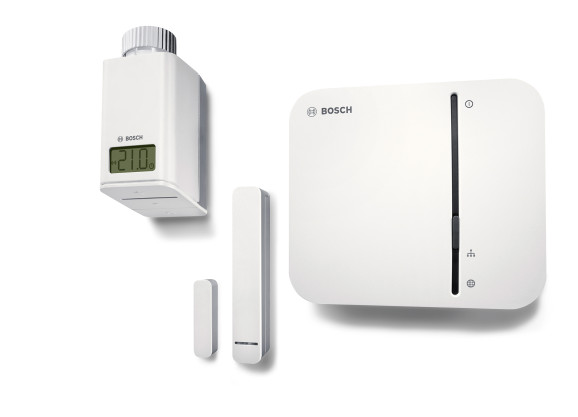
Bosch smart devices

(Reuters) – Robert Bosch is taking on U.S. technology rivals by launching its own cloud computing network to connect up anything from cars to dishwashers via the Internet.

Traditional German industrial companies like Bosch are looking to transform themselves from manufactures of equipment to service providers using data generated by their machines.

Bosch is hoping its engineering expertise will give it an advantage in making the “Internet of Things” (IoT), where objects communicate with each other, a reality for its customers in smart homes, connected mobility or intelligent industry.

Its announcement on Wednesday that it plans build its own cloud puts it in competition with services from U.S. technology giants Amazon, Google, Microsoft, IBM and Salesforce.

Bosch’s cloud will be run out of a computing center based in Germany, which it hopes will attract customers who may have doubts about data security of U.S-owned servers.

Bosch Chief Executive Volkmar Denner told a conference in Berlin that the company was building its own IoT and would combine this with its experience in making everyday objects.

“There are product companies like Bosch trying to add software and services and there are IT companies trying to get into the physical space. The race is completely open,” he said.

Stuttgart-based Bosch plans to run around 50 of its own in-house applications on the cloud this year, before opening up to other companies from 2017. It plans to roll out other data centers across the globe but declined to give a timeline.

More than five million devices are currently connected via Bosch’s IoT software suite. Applications include a system that enables users to remotely control the temperature of their home as well sensors that help drivers find parking spaces or firms track the quality of a product once it leaves a factory.

Bosch declined to disclose how much money it was spending on the cloud specifically but said it was investing around 500 million euros ($ 548 million) annually in new technologies.

The company plans to charge customers based on the services that they use, but did not give revenue forecasts. Market research firm Gartner estimates that global sales in the public cloud market will exceed $ 200 billion this year.

(By Caroline Copley. Editing by Alexander Smith)

Get more stories like this:  twitter  facebook

Uncategorized

RSS-5

Link to this post!

RSS-5

IDG Contributor Network: 5 myths about data encryption

It’s a heartache, nothing but a heartache. Hits you when it’s too late, hits you when you’re down. It’s a fools’ game, nothing but a fool’s game. Standing in the cold rain, feeling like a clown.

When singer Bonnie Tyler recorded in her distinctive raspy voice “It’s A Heartache” in 1978, you’d think she was an oracle of sorts, predicting the rocky road that encryption would have to travel.

Just a year earlier in 1977 the Encryption Standard (DES) became the federal standard for block symmetric encryption (FIPS 46). But, oh, what a disappointment encryption DES would become. In less than 20 years since its inception, DES would be declared DOA (dead on arrival), impenetrable NOT.

To read this article in full or to leave a comment, please click here


All articles

IDG Contributor Network: Tidemark goes verticals, machine learning and benchmarking

Tidemark delivers enterprise performance management (EPM) software. What that esoteric acronym means is that Tidemark helps organizations take internal data they already have and use it to plan the future steps they will take, but also to assess the historical performance of their organization. Tidemark was founded only a few short years ago (in 2009, to be precise) but has already raised close to $ 120 million from a host of investors over multiple rounds. Tidemark is a good example of a new breed of cloud vendor, those that were born into a world already comfortable with cloud-based enterprise tools such as Salesforce and NetSuite. Because of this fact, Tidemark hasn’t had to invent a category; rather it has the somewhat easier job of delivering an existing product category but in new and beneficial ways.

To read this article in full or to leave a comment, please click here


RSS-1

IDG Contributor Network: Tidemark goes verticals, machine learning and benchmarking

Tidemark delivers enterprise performance management (EPM) software. What that esoteric acronym means is that Tidemark helps organizations take internal data they already have and use it to plan the future steps they will take, but also to assess the historical performance of their organization. Tidemark was founded only a few short years ago (in 2009, to be precise) but has already raised close to $ 120 million from a host of investors over multiple rounds. Tidemark is a good example of a new breed of cloud vendor, those that were born into a world already comfortable with cloud-based enterprise tools such as Salesforce and NetSuite. Because of this fact, Tidemark hasn’t had to invent a category; rather it has the somewhat easier job of delivering an existing product category but in new and beneficial ways.

To read this article in full or to leave a comment, please click here

RSS-3


RSS-5